2026-10-23 ·
Step By Step Inspection For Spray Foam In Stafford Properties
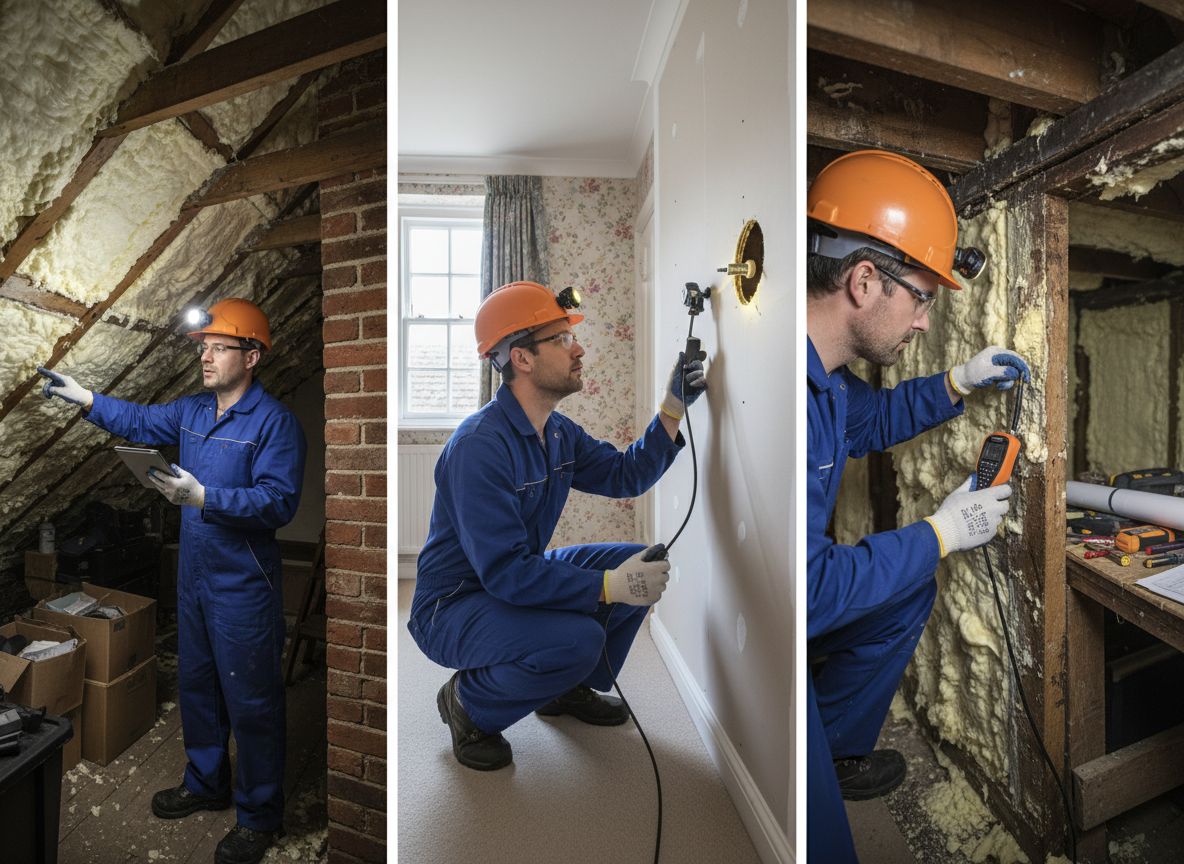
Inspecting spray foam in Stafford properties begins with a systematic visual survey of the loft followed by targeted moisture and adhesion tests. This sequence identifies whether the foam has trapped damp, affected timber or created mortgage issues common in the town's older housing stock.
Initial External and Loft Access Check
Start outside the property on streets such as those around Tipping Street and in the terraced rows near the town centre. Look for sagging rooflines, displaced tiles or staining on brickwork that often signals insulation problems in pre-1950 Stafford homes. Once inside, access the loft through the hatch and note the age of the building, as many Victorian and Edwardian terraces here have narrow roof voids that limit airflow once foam is applied. Check the condition of original timber rafters and joists for any visible distortion before touching the foam surface.
Moisture and Condensation Assessment
Use a moisture meter on rafters and ceiling joists at multiple points across the loft. In Stafford's damp winters, closed-cell foam frequently traps moisture against timbers, especially in properties near the River Sow where ground conditions stay wetter. Record readings above 18 percent as a concern and compare levels near the eaves versus the ridge. Document any black mould growth or musty smells that indicate poor ventilation after foam installation, conditions frequently reported in Penkridge and Eccleshall conversions.
Adhesion and Structural Integrity Test
Probe the foam edges with a blunt tool to test how firmly it bonds to the roof deck. In many Stafford lofts the foam pulls away from the original lath and plaster or from newer plasterboard ceilings after a few winters of thermal movement. Note any areas where the foam has shrunk or cracked, particularly around chimney stacks and soil pipes that are common in local properties. These checks reveal whether the insulation has compromised the roof structure before any removal work begins.
Documentation and Mortgage Implications
Photograph every inspected area and record measurements of foam thickness and coverage. Many Stafford sellers discover during surveys that lenders require proof the foam has not caused hidden damp, which is why an insulation assessment is often requested. Cross-reference findings with the property's age and any past loft conversions common in the Rugeley and Cannock corridors. This record helps when discussing next steps with buyers or surveyors.
If the inspection shows widespread issues, review removal options suited to Stafford's narrow streets and older roof constructions. Further reading on local costs appears in the guide to cost factors for spray foam removal in Staffordshire homes. Sellers should also consult the article on what Stafford sellers should know about spray foam before listing and consider a mortgage lender spray foam removal specialist when needed. TrueCoat Specialists operates 24/7 from 2 Staffordshire Place, Tipping Street, Stafford, ST16 2DH to support these inspections across the county.