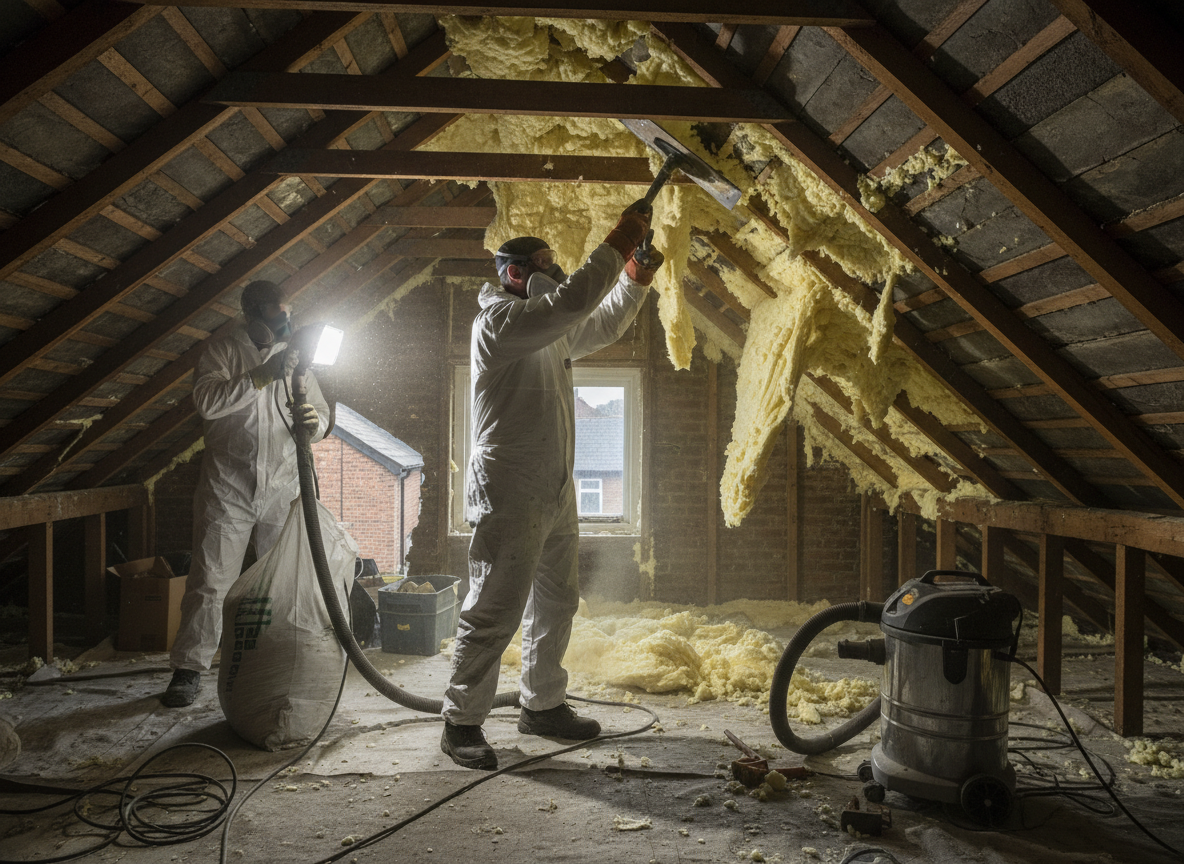
Stafford's older housing stock, particularly Victorian terraces and post-war semis around Tipping Street and the town centre, often has spray foam applied directly to rafters and between joists. Removing it requires careful separation from timber that has absorbed moisture from the county's frequent rainfall and high humidity. Rushing the job risks damaging original lath and plaster ceilings below or leaving residue that continues to trap condensation.
Winter temperatures in Staffordshire frequently drop low enough to make the foam brittle in places while still flexible in others, so removal crews must adjust technique depending on the season. Older properties near the River Sow can also have higher background damp levels that affect how deeply the foam has bonded. Proper containment sheeting and negative air pressure are essential to stop particles drifting into living spaces below during extraction.
Homeowners in Stafford sometimes discover that previous foam installations blocked original roof vents, leading to hidden rot once the material is gone. A full removal includes checking rafter ends and wall plates for decay, then advising on breathable alternatives that suit the local climate. Leaving any foam behind near electrical cables or junction boxes creates future access problems that only become clear after the loft is cleared.
Technician insight
In Stafford, the thing that catches most people out with loft spray foam removal is how the damp local climate lets moisture sit behind the foam in older terraces around the town centre. Homeowners often assume the foam is the only issue, but once it is gone we regularly find wet timber and blocked original vents that need addressing before any new insulation goes in.
Foam Removal in Stafford Terrace Loft
A homeowner near Tipping Street reported musty smells in a post-war semi. Inspection showed spray foam trapping condensation against rafters with early rot at one gable end. We removed the foam section by section, cleared debris, and opened blocked vents. The loft dried out and the owner avoided further timber repairs.
How it works
- 1
Initial Loft Inspection
We assess foam depth, timber condition and access points in Stafford properties, noting any signs of trapped moisture or previous ventilation changes.
- 2
Site Protection and Containment
Floors, electrics and lower ceilings are covered, with dust extraction set up to keep particles from reaching living areas during removal.
- 3
Controlled Foam Extraction
Foam is cut and peeled in sections, working around rafters and checking for hidden rot as work progresses in typical Staffordshire lofts.
- 4
Debris Removal and Final Check
All material is cleared from site, the loft is ventilated, and we inspect for any remaining residue or structural concerns before handover.
Pricing
Prices vary according to loft size, foam thickness and access difficulty; we provide a clear quote after inspection.