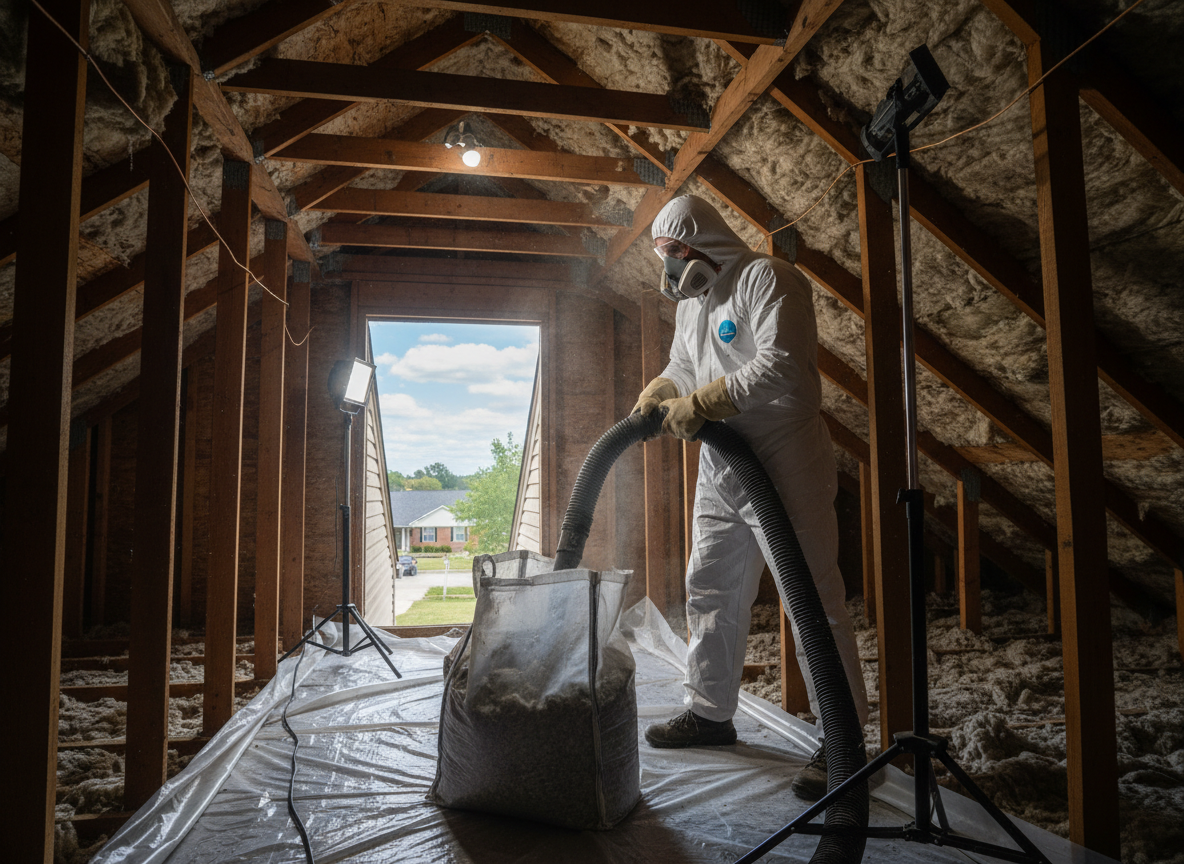
Stafford's housing stock includes many Victorian terraces and 1960s-1970s semis where spray foam was applied to roof voids and ceilings. Removing it requires careful separation from lath and plaster or timber joists to avoid structural damage. Damp conditions common in the Staffordshire climate often mean the foam has absorbed moisture, complicating extraction and requiring extra containment to prevent mould spread during work.
Edge cases arise in properties near the River Sow where high water tables increase condensation behind foam layers. Technicians must check for hidden electrical wiring and pipework before starting, as older Stafford homes frequently have non-standard cabling runs. Proper negative air pressure setups protect the rest of the house while the foam is cut and vacuumed out in sections.
Local building regulations in Stafford require waste materials to be disposed of through licensed channels, especially when foam contains older chemical formulations. Homeowners should expect the process to expose original insulation gaps or roof defects that need addressing before any new materials are installed. Work in tight lofts common to Tipping Street and surrounding streets demands compact equipment and staged removal to maintain access.
Technician insight
In Stafford, the thing that catches most people out with insulation removal service is the older terraced houses around the town centre where spray foam was sprayed straight onto lath and plaster, so pulling it risks bringing down ceilings unless you work in very small sections and support the plaster from below first.
Spray Foam Removal in a Stafford Terrace
Homeowner in a 1930s terrace near Tipping Street reported musty smells and poor loft ventilation. Inspection found thick closed-cell foam bonded to original ceiling laths with trapped moisture. Removal proceeded section by section with temporary supports, followed by debris extraction and licensed disposal. The loft was left clear for proper ventilation upgrades.
How it works
- 1
Initial Assessment
Inspect the property in Stafford to identify foam type, depth, and any hidden services or structural concerns.
- 2
Containment Setup
Install dust barriers and negative air machines to protect living spaces from particles during removal.
- 3
Foam Extraction
Cut and remove foam in controlled sections using specialist tools suited to the building's age and construction.
- 4
Cleanup and Disposal
Vacuum residues, clear debris, and handle waste according to Staffordshire disposal rules before final walkthrough.
Pricing
Costs depend on property size, foam thickness, and access difficulty; upfront quotes provided after inspection.