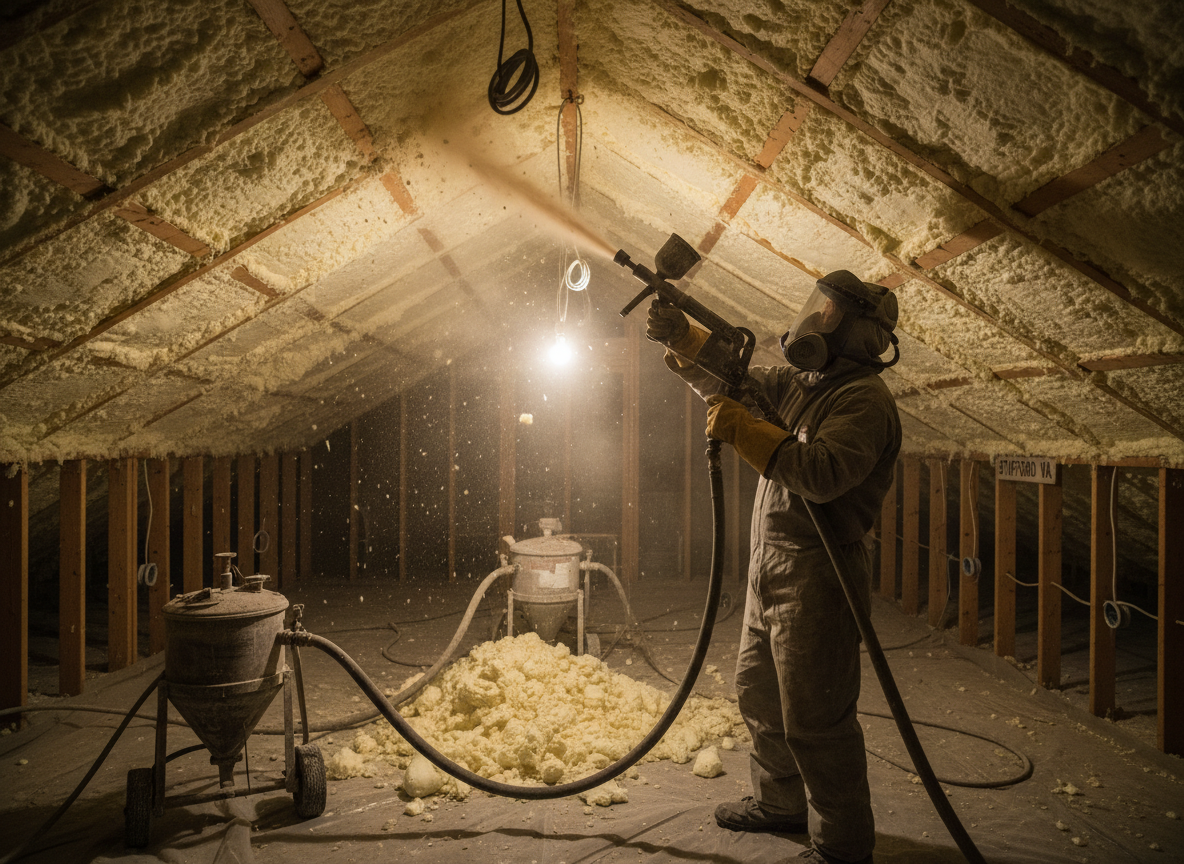
Sand blasting spray foam insulation removal requires controlled abrasive media to strip polyurethane layers from roof voids without damaging underlying timbers or plaster. In Stafford properties, many Victorian and mid-century terraces have spray foam applied directly to lath and plaster or exposed rafters, where the foam bonds tightly due to decades of settling and moisture cycles typical of the Staffordshire climate. Operators must adjust blast pressure and media type on site because older softwood joists and historic ceilings fracture easily under excessive force. Containment sheeting and negative air machines are essential to prevent dust migration into living spaces below, especially in terraced homes where party walls allow sound and particle travel between properties.
Edge cases in the Stafford area include foam that has absorbed water from leaking slate roofs, turning the material into a dense, heavy mass that clings to surfaces. Sand blasting then needs multiple passes at varying angles to break the bond while monitoring for hidden rot in rafters, a common issue after prolonged wet winters. Local building practices often left minimal ventilation in lofts, so removal crews must restore airflow afterward to meet current moisture control expectations. Homeowners sometimes attempt DIY scraping first, which leaves residue that clogs blast equipment and extends job time on subsequent professional visits.
Regulatory considerations for Stafford jobs focus on safe disposal of removed foam and dust, as the material is classified as non-hazardous but generates significant waste volume. Crews bag and remove debris the same day to avoid attracting vermin in residential streets around Tipping Street and the town centre. Electrical wiring and pipework running through the foam must be identified and protected before blasting begins, since older properties frequently have cabling embedded directly in the insulation layer.
Technician insight
In Stafford, the thing that catches most people out with sand blasting spray foam insulation removal is the tight bonding in Victorian terraces around the town centre where decades of damp cycles make the foam grip lath and plaster ceilings, so blast pressure must stay low or you risk pulling historic plaster away.
Terraced Loft Clearance in Central Stafford
A homeowner on a street near Tipping Street reported persistent loft damp. Inspection showed spray foam had trapped moisture against rafters. Controlled sand blasting removed the foam in sections while protecting original lath ceilings. The void was cleared of debris and ventilated, stopping further moisture buildup.
How it works
- 1
Initial Loft Assessment
Inspect roof void condition, measure foam depth, identify wiring and structural elements, and note any damp or rot in Stafford properties.
- 2
Containment Setup
Install floor-to-ceiling sheeting, negative air filtration, and floor protection to contain dust within the work area.
- 3
Controlled Sand Blasting
Apply calibrated abrasive blasting to remove foam layers while protecting timbers, plaster, and services in older local housing stock.
- 4
Debris Removal and Final Clean
Bag and clear all waste, vacuum residual dust, and restore loft ventilation before leaving the site.
Pricing
Cost depends on loft size, foam thickness, and access constraints; upfront quotes provided after inspection.